
Article and photos by: Matt Siefert
Autumn is a time of abundance. Cultures across the globe have various means of celebrating the harvests that occur at the end of each growing season. These celebrations often take the form of large feasts, with Thanksgiving Dinner being the common meal those of us in the United States share each year. Humans, however, are not the only ones that celebrate this time of year. While we have our fill of food, drinks, and unsolicited political discourse from that uncle nobody likes, an entirely different feast occurs each autumn in a much wetter venue: headwater streams.
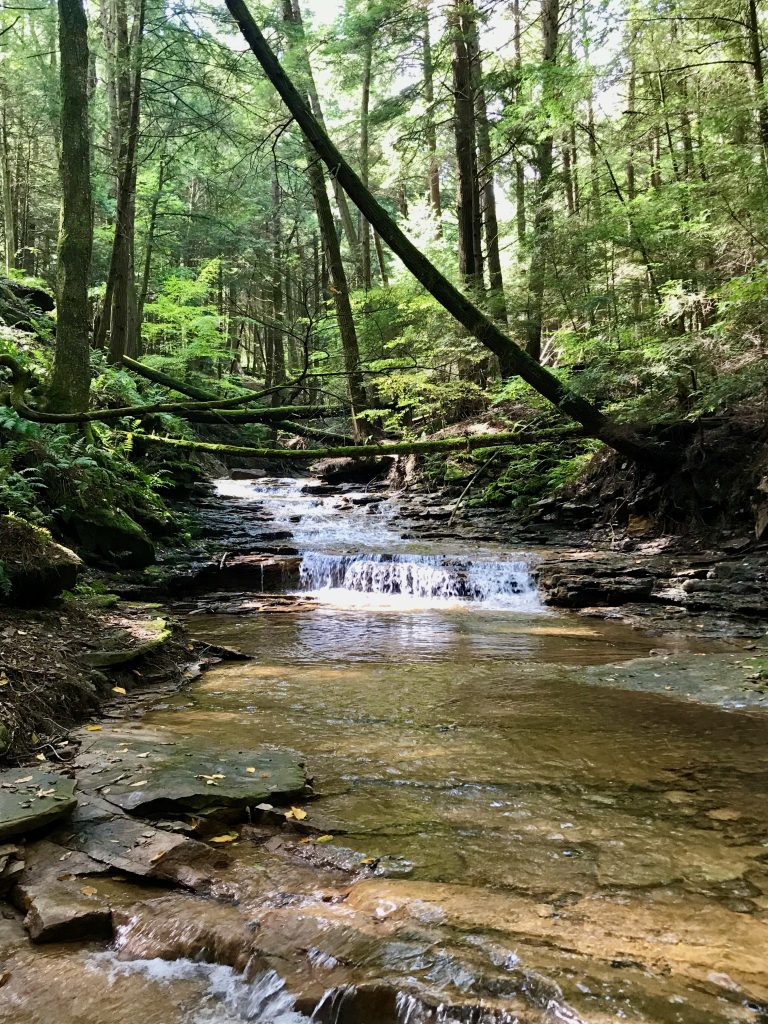
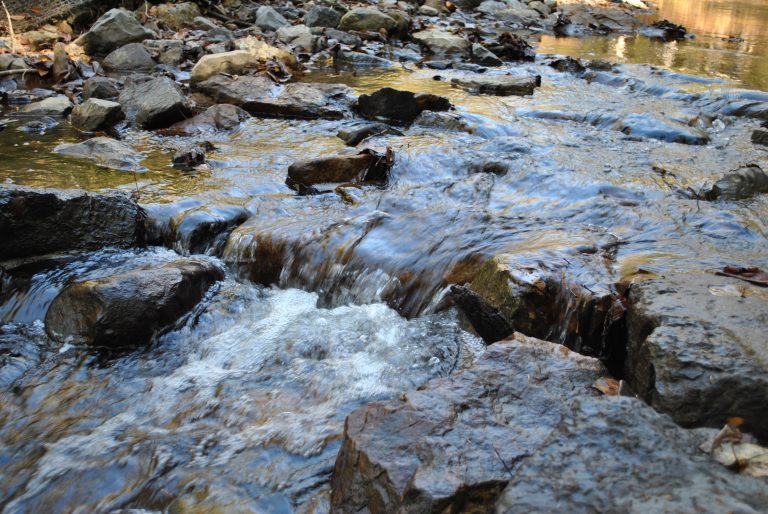
Headwaters are the small channels from which all larger streams and rivers originate. These include streams that flow from high in the mountains, streams that cut a path through valleys as water drains into bottomlands, spring-fed creeks that seep from underground sources, and more. Some headwater streams don’t even hold water throughout the year, which we call ephemeral (short-lived) streams. Though these streams may vary in their physical features, they often share several key characteristics. The first of these characteristics, the “feast” I mentioned above, involves how energy (food) is produced.
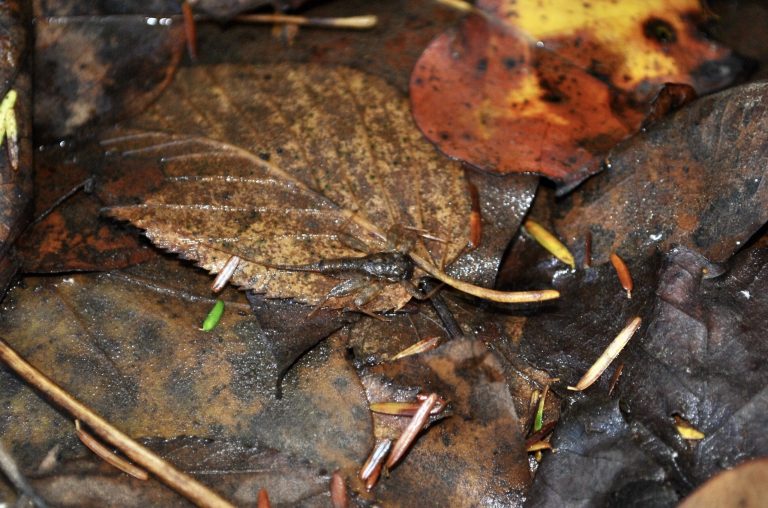
In many headwater streams, plant life within the channel itself is often limited to patches of algae or moss. To many of the streams’ plant-eating animals, algae and moss make for a poor feast. So, if the plant energy isn’t coming from within the stream itself, what is everyone eating? The answer lies outside the channel itself. Many headwaters occur directly within or nearby wooded areas. When fall starts to live up to its name, many of the dropped leaves will end up in the streams below. These leaves then serve as the main source of plant-based food in the ecosystem.
We refer to this as allochthonous production, which basically means “energy production occurring from outside a given system”. In contrast, a large river that can support its own aquatic plants would exhibit autochthonous production, or energy production from within the system; the majority of plant-based food grows within the ecosystem itself.
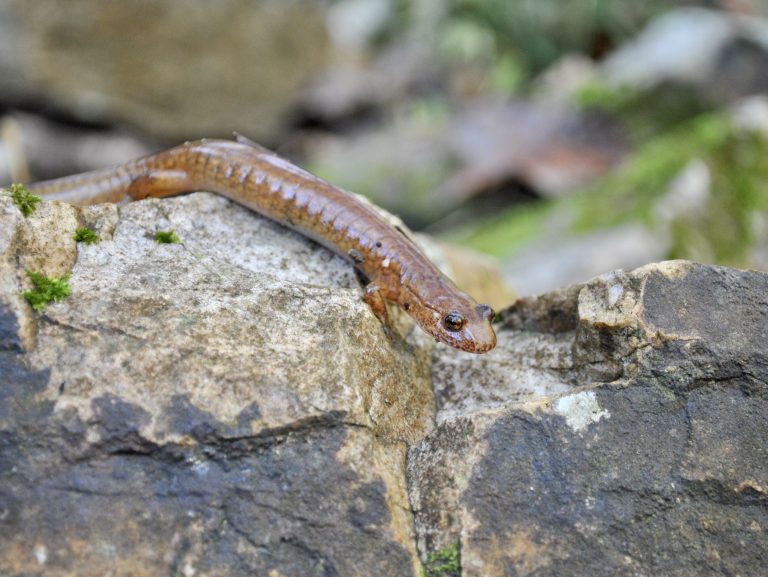
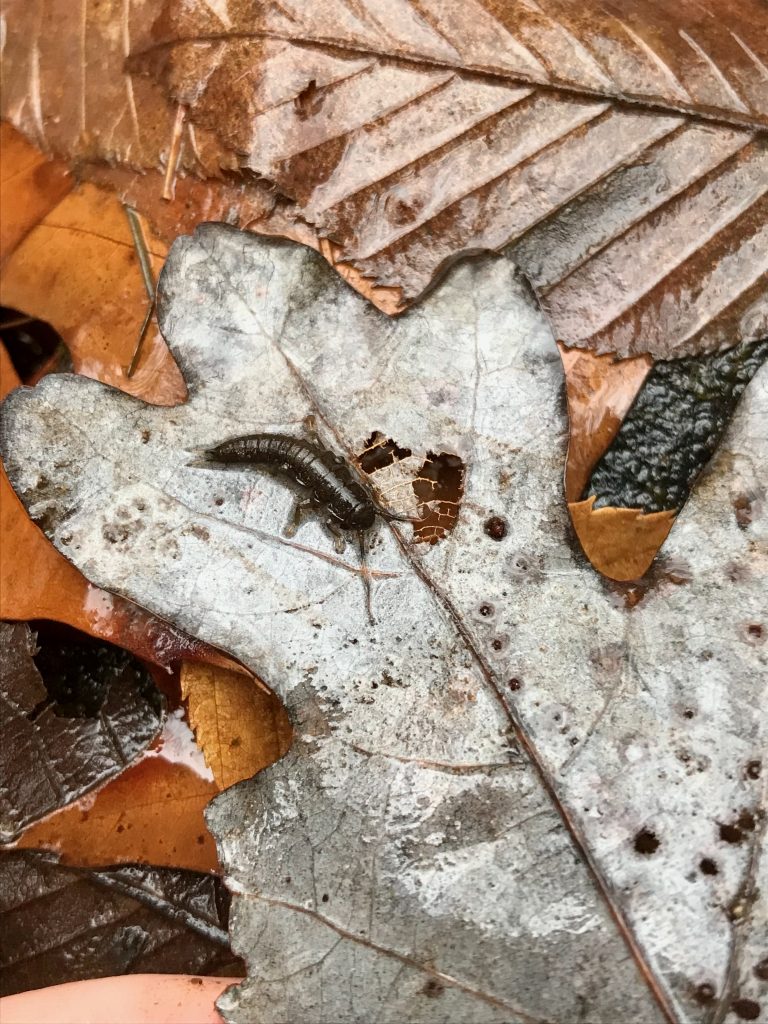
To appreciate the grand autumn feast of our headwaters, we also need to know more about its participants. The first to feed on the leaves are a group of invertebrates commonly referred to as the shredders. These include insects like mayflies, stoneflies, some aquatic beetles, and more. The aptly named shredders use their mouths to rip chunks of leaves into bite-sized morsels. There are also the scrapers: invertebrates that crawl over stones or logs while scraping plant matter or fungi off them. Unfortunately for the shredders and scrapers, not all organisms in the stream eat plants. Many predator species can be found in headwaters. Dragonfly nymphs, beetle larvae, salamanders, and fish will prey upon the herbivorous insects they find (as well as each other). Without the input of leaf matter into headwater streams, these food webs would not be able to support the variety of life that we find within them.
The leaves don’t just support headwater ecosystems. As the shredders break down their food, small pieces of leaf matter float downstream. These small pieces, which are often referred to as fine particulate organic matter (FPOM), are then collected downstream by a group of insects known as…collectors. Caddisflies and some true flies are collectors, capturing floating pieces of leaf matter in silk nets or with specially adapted mouthparts. The collectors, in turn, are eaten by downstream predators. Many of us associate autumn with big meals and falling leaves. In our streams, these are one in the same. As the colors fade and fall away, and our landscape shifts to mottled tones of brown and green, I remind myself that this now-muted world we find ourselves in is the price for the fascinating inhabitants of headwater streams to survive. It’s one I gladly pay each year.