
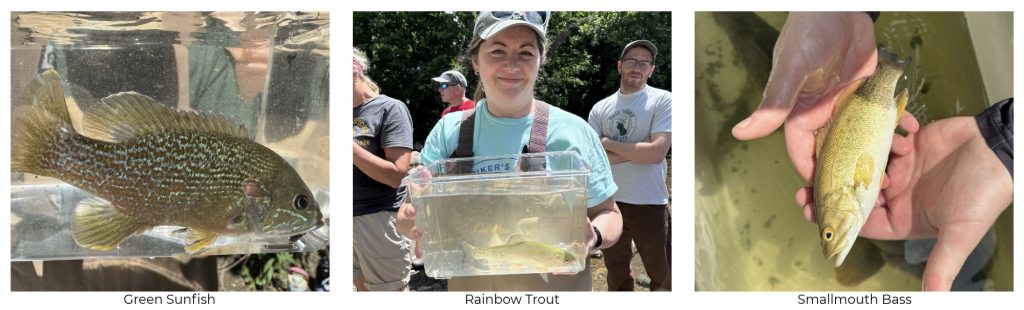
Efforts to restore native fish populations in Tinker’s Creek are gaining momentum, with new monitoring results offering encouraging signs that relocated species are surviving, reproducing, and spreading throughout the creek.
Reconnecting Fish Communities in Tinker’s Creek
Since 2024, the Northeast Ohio Regional Sewer District (NEORSD) has been introducing native fish species into sections of Tinker’s Creek upstream of two known fish barriers. The project aims to restore fish populations and improve aquatic life in the upper watershed.
Between 2024 and 2026, over 17,000 fish representing eight native fish species were introduced into the creek. Each fall, researchers monitor the fish’s survival, reproduction, and movement throughout the stream.
The 2026 monitoring results provide promising evidence that the effort is working. Three of the eight introduced species were collected, along with more than 100 untagged fish, suggesting that the introduced species are successfully reproducing in Tinker’s Creek. Researchers also documented translocated fish more than four miles upstream from their original release location, providing evidence that these populations are spreading throughout the Tinker’s Creek system.
NEORSD Environmental Assessment team plans to continue introducing select native fish species through 2027, with annual monitoring continuing beyond that time. A comprehensive water quality assessment planned for 2030 will evaluate fish populations, aquatic insects, habitat, and water chemistry to determine progress toward meeting Ohio’s aquatic life use standards.
Why It Matters
Native fish play an important role in the aquatic food web and serve as indicators of stream health. Their return and successful reproduction are encouraging signs of progress toward healthier, more balanced aquatic ecosystems.
Restoring native fish populations strengthens the ecological connections throughout the Tinker’s Creek watershed. TCWP has had the opportunity to participate in electrofishing monitoring at Hemlock Creek, gaining a closer look at local fish communities and ongoing restoration efforts. We’re happy to be part of these hands-on opportunities alongside NEORSD and other watershed partners, helping connect community members with watershed science and the work needed to support healthy aquatic ecosystems.
We’re looking forward to more opportunities to get involved and encourage community members to join us! Check our Events page for upcoming volunteer opportunities.