
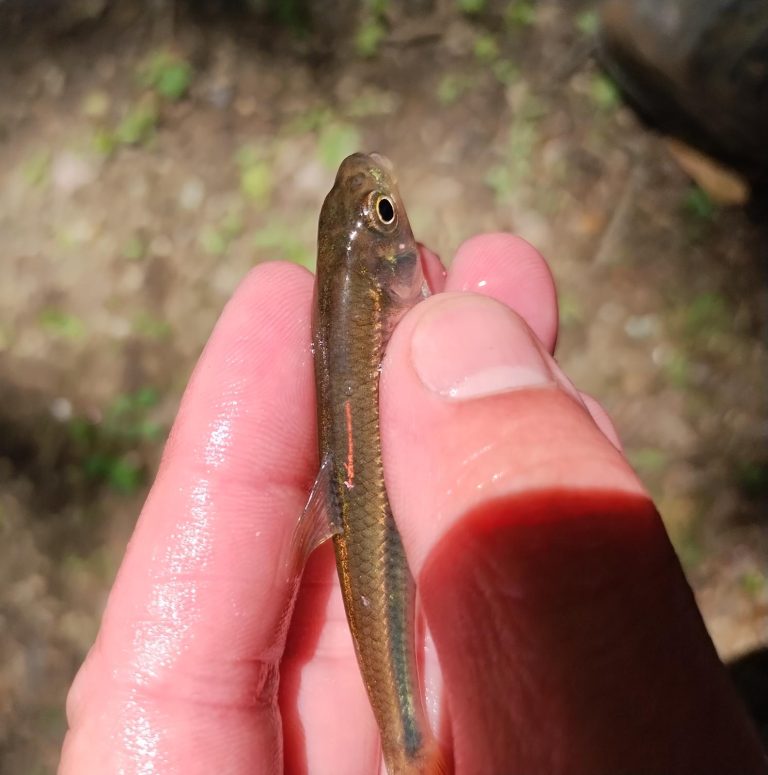
Common shiner
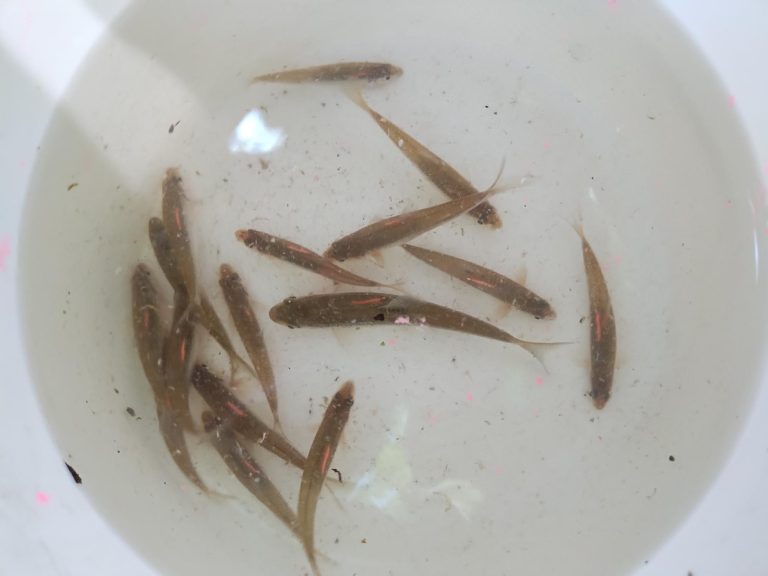
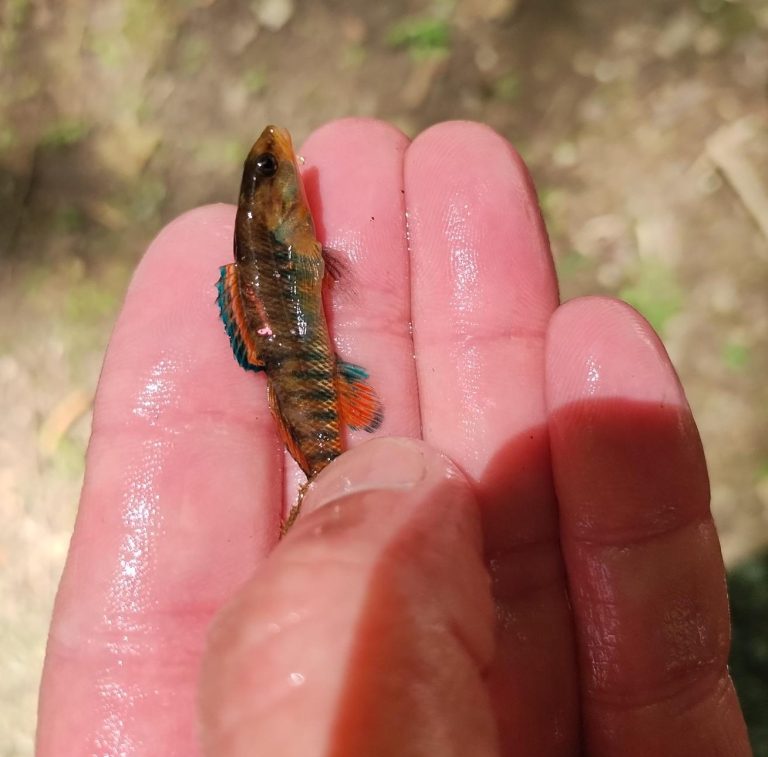
Rainbow Darter
Big things are happening beneath the surface of Tinker’s Creek. This fall, the Northeast Ohio Regional Sewer District (NEORSD) shared exciting results from ongoing native fish relocation projects in both Tinker’s Creek and Plum Creek. These efforts bring balance, movement, and biodiversity back to our local waterways.
Reconnecting Fish Communities in Tinker’s Creek
Since 2024, NEORSD has been working to return native fish to sections of Tinker’s Creek that sit upstream of two major barriers. Even though fish populations have steadily improved since the Ohio EPA first evaluated the creek in 1984, several common native species were still missing. Their absence held back biological health scores, which are measured using two tools: the Index of Biotic Integrity (IBI) and the Modified Index of Well-being (MIwb). These scores help scientists understand how well fish communities and their habitats are functioning.
To close the gap, NEORSD released more than 12,000 fish from eight native species into Tinker’s Creek throughout 2024 and 2025. Fall 2025 sampling brought great news: five species are now surviving and reproducing on their own, including rainbow, greenside, and fantail darters, plus common and sand shiners.
These newcomers are already making a difference. Fish community assessments showed a clear bump in biological health. At one important monitoring location, the IBI score climbed to “Good,” the highest rating ever recorded upstream of the Tinker’s Creek gorge. As these fish continue to establish themselves, they’re expected to boost water quality and stabilize the creek’s ecosystem over time.
NEORSD’s Environmental Assessment team will continue introducing select species through 2026. Each fall, staff will check in on reproduction, movement, and survival, with a full water quality assessment scheduled for 2030.
A similar project in Plum Creek, a Rocky River tributary, is showing the same momentum, with multiple species successfully reproducing years after relocation.
Why It Matters
Native fish are more than just swimmers in the stream. They help keep food webs balanced, manage algae and insect populations, and act as natural indicators of water quality. When native fish return, it signals that the entire system is healing.
Restoring these species strengthens the ecological connections that run throughout the Tinker’s Creek watershed. We’re proud to partner with NEORSD on this science-driven work to improve stream habitat, reconnect waterways, and support thriving aquatic communities.